

Hello, lovely homeowners! It’s your friendly neighborhood home inspector, and today we’re going to chat about a sneaky little intruder that might be lurking in your home—radon. We thought national radon action month is the best time to help bring attention to the topic.
But don’t worry, we are here as your friendly neighborhood home inspectors to explain what radon is, why it matters, and how we can kick it to the curb (or at least keep it under control). Our radon technician is nationally certified and has been in the business of identifying radon issues since the 1980s and has knowledge and even more knowledge about radon in the southeast Michigan area, including Ann Arbor.
What is Radon, Anyway?
Radon is a radioactive gas that forms from the natural decay of uranium in soil, rock, and water. Radon is a naturally occurring gas and is the heaviest gas. It’s everywhere, but it’s usually not a problem outdoors because it dissipates quickly. Sounds harmless, right? Not so fast. When radon gets trapped in your home (particularly the lower levels like basements, crawl spaces) it can accumulate to levels (above 4.0 pCi/L) that increase your risk of lung cancer. Radon is the second leading cause of lung cancer in the U.S., just behind smoking. Who knew geology could be such a bummer?
The kicker? Radon is odorless, tasteless, and invisible. It’s like a ninja gas. You can’t see it coming, but it’s there. This is why testing for radon is so important—and why we at Integrity Inspection Group can help you test for it.
Why Should You Care?
You might be thinking, “Why should I care about some invisible gas?” Well, radon isn’t just any invisible gas—it’s a health hazard. Prolonged exposure to radon can increase your risk of lung cancer, especially for those who are younger, older or who have compromised immune systems. Prolonged exposure to high levels of radon is the second leading cause of lung cancer, after smoking. It’s responsible for thousands of deaths each year. So, yeah, it’s kind of a big deal.
Here’s the deal: Radon levels are measured in picocuries per liter (pCi/L). The EPA recommends any level at or above 4.0 pCi/L needs action. But even levels below that aren’t ideal. Think of it like eating a questionable burrito—just because it’s not technically expired doesn’t mean it’s good for you.
The EPA estimates that 1 in 5 homes in the United States have elevated radon levels. This tends to vary by areas of the country. The Michigan Zone 1 counties (or countries with the highest levels) include Branch, Calhoun, Cass, Hillsdale, Jackson, Kalamazoo, Lenawee, St. Joseph, and Washtenaw. In Washtenaw county, homes are even more likely to have more homes with higher than 4.0pCi/L. The Washtenaw county levels as recent as 2023 is 2 out of 5 homes. Chelsea, Manchester, Dexter, Whitmore Lake and Saline homes have been testing higher in recent months.
Radon is a master escape artist. It seeps into homes through cracks in floors, walls, and foundations, and even through gaps around pipes. Once inside, it can build up to dangerous levels. Think of it like a sneaky ninja gas that loves to hide in the most unexpected places.
Radon is a sneaky little gas. It enters your home through:
Basically, if your home is touching the ground, radon can find its way in. It’s like that one friend who always shows up uninvited but with way more serious consequences. It doesn’t matter the age of the home, radon may be found in any age home. Don’t worry, it’s not the end of the world. You can test for high radon levels in your home and you can mitigate the levels.
Testing for Radon: It’s Easier Than You Think
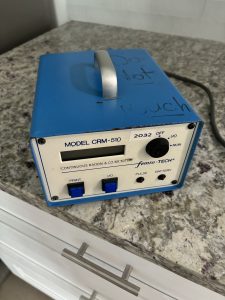
The good news is that testing for radon is simple. You can buy a do-it-yourself kit at your local home improvement store or hire a professional (like us!) to do it for you. Professional testing is more accurate and gives you peace of mind that everything was done correctly. Plus, we have cooler gadgets.
Our radon tests use 48 hour Continuous Monitoring Radon. There are some ways to ensure the best testing results possible. The home should be closed up for at least 12 hours prior to the test and the testing unit should be left undisturbed for the testing process. No leaving windows open for fresh air!! That is why the winter time is ideal for testing (we don’t really open our windows in Michigan during the winter.) We can help you out, just let us know if you have any questions. Our home inspectors are NRSB certified to give you the results so you can have peace of mind. Many people will have their homes tested with home inspections. We think that is a good idea. In Michigan, it is not required to test your home for radon prior to selling your home.
With testing, it isn’t a one time thing. The ground beneath us is constantly moving. Kinda like a train traveling on the tracks of life. The movement of the ground can cause the uranium to be released and/or cracks to be formed in the building’s foundation. We recommend testing every few years, especially if you are in one of the Zone 1 counties, like Washtenaw county. An even better way to get a full picture of the potential in your home, is to test in opposite seasons. So if you tested in 2025 in the winter, you should test in 2027 in the summer. Another thing to think of is if there has been construction nearby or in your home, you may want to get your home tested. The construction could cause cracks to form in the ground around your home or your home itself.
Radon Mitigation: Fixing the Problem
If your radon test comes back high (meaning it’s above the EPA’s action level of 4.0 pCi/L), don’t panic! There are effective ways to mitigate the problem.
Radon may not be the most exciting topic, but it’s an important one. Testing for it is a small step that can make a big difference in your safety. Testing is key, and since it’s odorless and colorless, it’s the only way to discover an issue. And if you find high levels, mitigation is usually straightforward. Whether you’re buying a new home, selling your current one, or just curious, knowing your radon levels is always a good idea.
So, don’t let this invisible home invader ruin your health – get your home tested today! If you haven’t tested your home for radon yet, what are you waiting for? Give us a call, and let’s make sure your home is as safe as it is cozy. Because when it comes to radon, knowledge isn’t just power—it’s protection.
Stay safe, stay informed, and remember: radioactive ninja gas is no match for a savvy homeowner with a plan.